
More than a skipping stone
2026-10-04
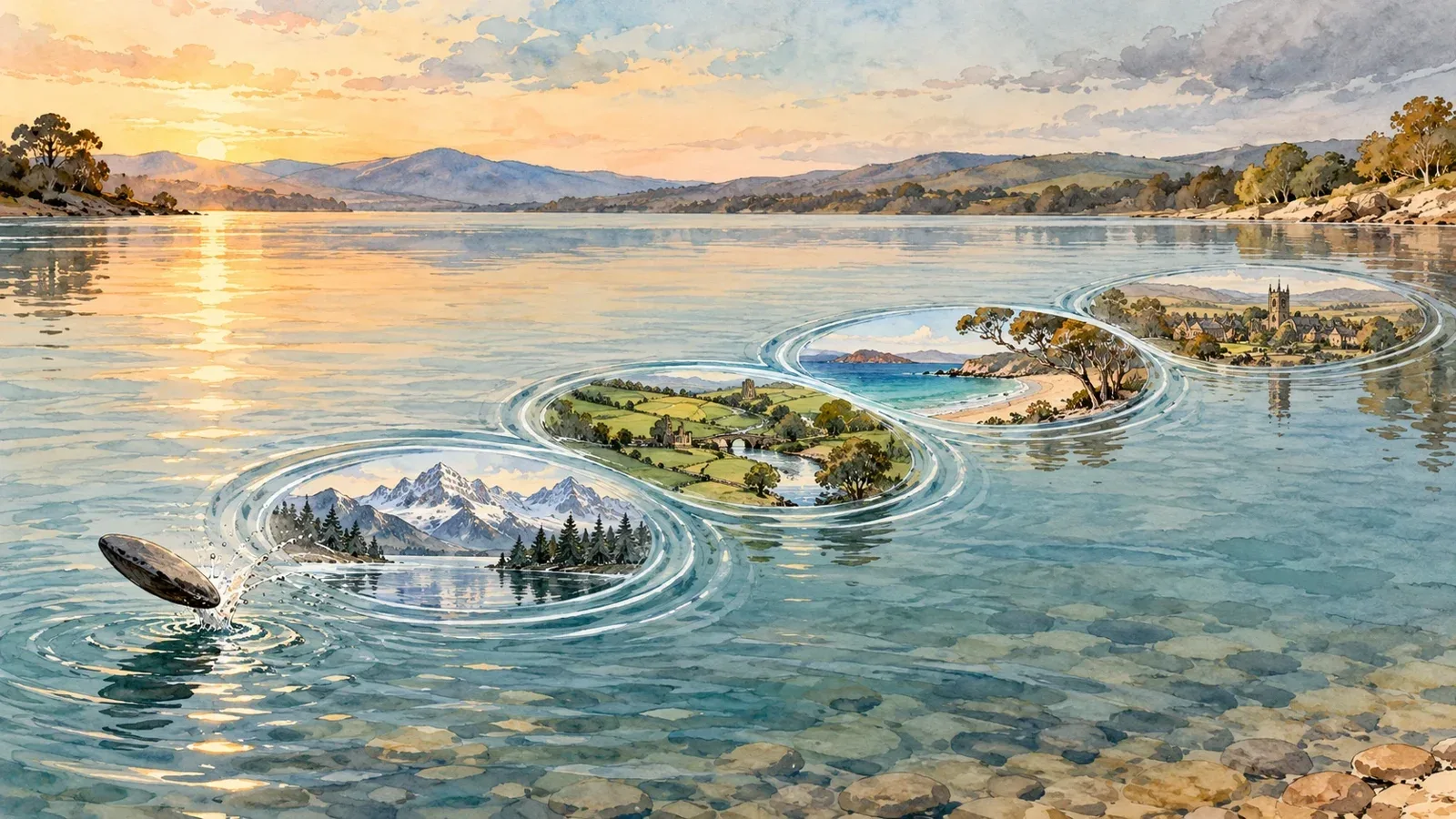
A while ago I read a piece in The Sunday Times about people chasing the perfect life abroad. One of them described it as being “like a skipping stone… where, however much I try, I can never drop deep enough.” I couldn’t get that line out of my head for days.
I’m on my fifth country now, and I’ve never really felt like a nomad. Nomads, in my head, travel light. I have never once managed that. Every time I moved, I wanted to understand the place properly: how people talk to each other, what makes them laugh, what makes them nervous, and how the landscape seems to shape all of that.
France was the Alps. Hard to ignore them when they’re at the end of the street. Winters meant skiing, summers meant long walks through villages that seemed to have decided, as a group, not to rush anything. The bigger change was the language. Once my French was good enough to follow political debates, ideas like laïcité and social solidarity stopped being words in a textbook and started making sense.
Ireland was softer. Greener too, obviously. The Shannon around Limerick was calm in a way the lab never was. Then Dublin was busier and more mixed: canals, packed cafés, accents from everywhere, people always arriving or leaving. The Irish understand emigration better than most, and I found that oddly comforting. You can stretch your identity across a sea without it snapping.
Australia changed me the most, I reckon. It’s a big, open place and it slows you down from the inside. Christmas at the beach. Long drives that end either in snow or at the coast. Free barbecues in public parks, where complete strangers cook their sausages side by side and nobody makes a fuss. And spicy hot chocolate in Melbourne cafés, which I still miss more than is probably reasonable. What started as a temporary move turned into citizenship. Signing those papers didn’t feel like admin. It felt like admitting that a part of me now belonged there.
The catch is that the more seriously you take each place, the harder it gets to say where home is. Bits of me are attached to mountains, rivers, languages, jokes and habits on opposite sides of the planet. I’m a local in several places and a little bit foreign in all of them, including, some days, the one I grew up in.
Here in the UK I’ve noticed the same urge coming back. I don’t just want to live somewhere; I want to take part. Join things, help out, have a say in how my town works. That’s partly why I ended up on the town council, which is not a sentence I expected to write when I was twenty.
I think there’s something real in that urge. A lot of modern life feels like being carried along by things much bigger than us: jobs, rents, visas, paperwork, algorithms. Plenty of people drift between cities and jobs with very little say in any of it. In my experience, feeling at home has less to do with finding the perfect place and more to do with getting back a bit of control: over your routines, your friendships, and the small corner of the world you can actually change. Places start to feel like home once you’ve helped shape them a little.
Moving around also taught me that being content travels surprisingly well. You can be miserable somewhere beautiful, and you can build a good life somewhere that felt temporary and strange at first. Where you are matters, but how settled you are inside matters more.
So I’ve stopped looking for the perfect country. I don’t think it exists, and if it does, the coffee is probably terrible. What I look for now is enough friends, routine, purpose and community to feel grounded wherever I land. And every place I’ve really loved has left a bit of itself behind in me. Not a bad way to end up a bit of a mix.